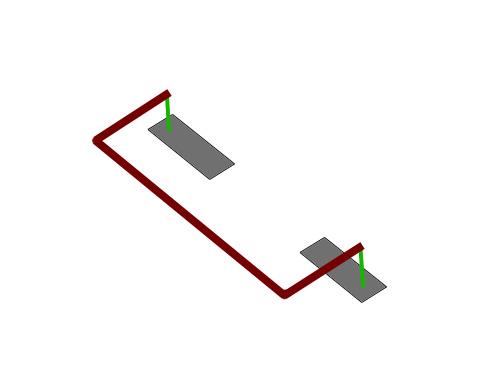
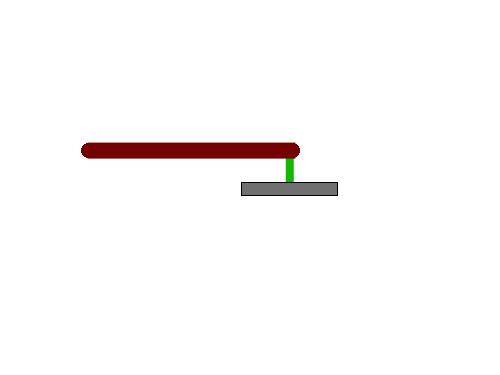
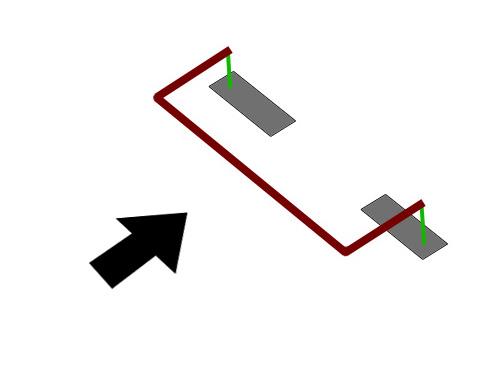
The red part represents the anti-roll bar, the green parts are the anti-roll bar links, and the gray plate-like part represents the lower control arm.

When the suspension moves through its travel, the anti-roll bar moves like this,

and the lower control arm moves like this.
It kind of looks like a bird’s wing…
Flap, flap, flap.
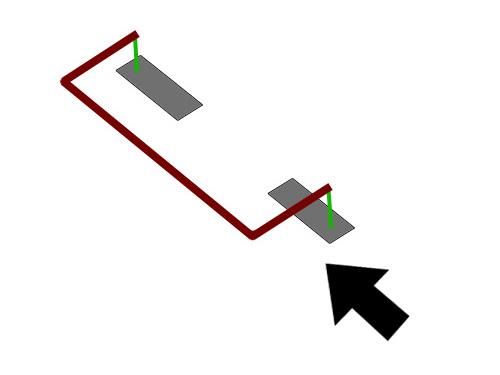
Now, if we look at this from the side,
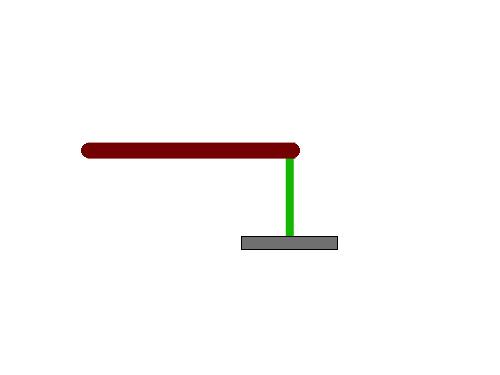
this is what it looks like.
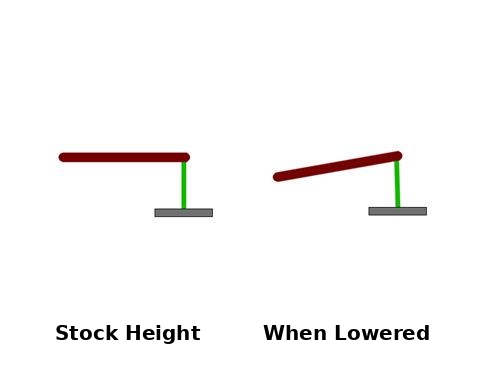
With the car at its normal ride height and with the ride height lowered, you get something like this.
So, about shortening the anti-roll bar links…
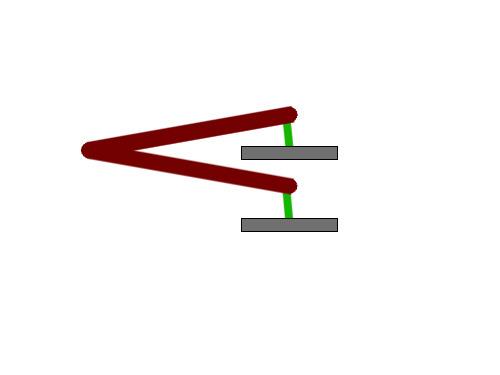
If the suspension only travels this much, it might be fine,
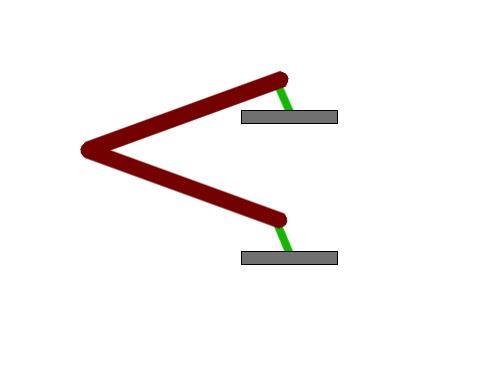
but as it continues to travel, the anti-roll bar link gets pulled toward the front of the car (to the left in the diagram).
You can see that the green anti-roll bar link is being pulled and ends up at an angle.
That’s because the anti-roll bar moves in an arc rather than simply moving up and down.
If you try to compress the suspension any further from here… “Aaaah! It’s gonna snap!” Something like that?
Many of these dimensional discrepancies are probably accommodated by deformation of the anti-roll bar bushings or suspension-arm bushings, or by the anti-roll bar flexing slightly.
However, the design is based on the stock ride height and stock anti-roll bar links. So, if you change the dimensions of the various components with aftermarket parts, you may go beyond the range where everything can accommodate the difference.
Rubber bushings aren’t going to deform indefinitely, either…
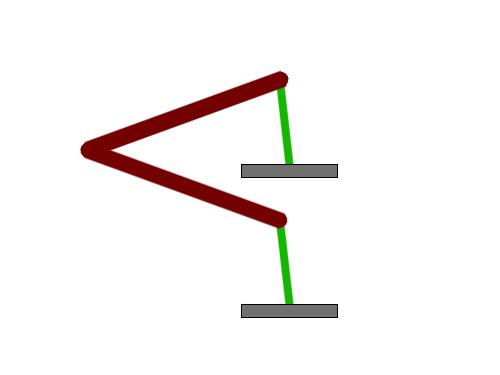
In theory, a longer link gives you more room.

But if the suspension travel is the same, the difference in link length on a lowered car looks like this.
During compression, a longer anti-roll bar link causes the anti-roll bar to sit at a steeper angle, while a shorter link puts more load on the link even when the anti-roll bar is at a gentler angle.
Which one is better depends on the dimensions, but during rebound, a longer link seems to have more room to spare.
By the way, when viewed from this side, the lower control arm also moves in an arc, so as the suspension travels, the lower control arm pulls the anti-roll bar link inward.
A shorter link is at a disadvantage here as well.
Flap, flap, flap.
And that’s the story of short anti-roll bar links.
They might work well for cars with very little suspension travel, such as race-spec cars.